
01
Old age
Lens proteins change slowly over decades. The lens yellows and stiffens, so light no longer passes as a clear image. This is the most common cause of cataract.
Clear Vision. Expert Care. Healthier Eyes.
M G Eye Foundation/Services/Cataract Services
We aim to provide our patients with the best treatment for cataracts at M G Eye Foundation, Bara Gamharia, Jamshedpur. Our cataract surgeons, DR KUMAR SAKET and DR MALAY KUMAR DWIVEDI, continually enhance their expertise through professional development, remaining at the forefront of current techniques in cataract surgery.
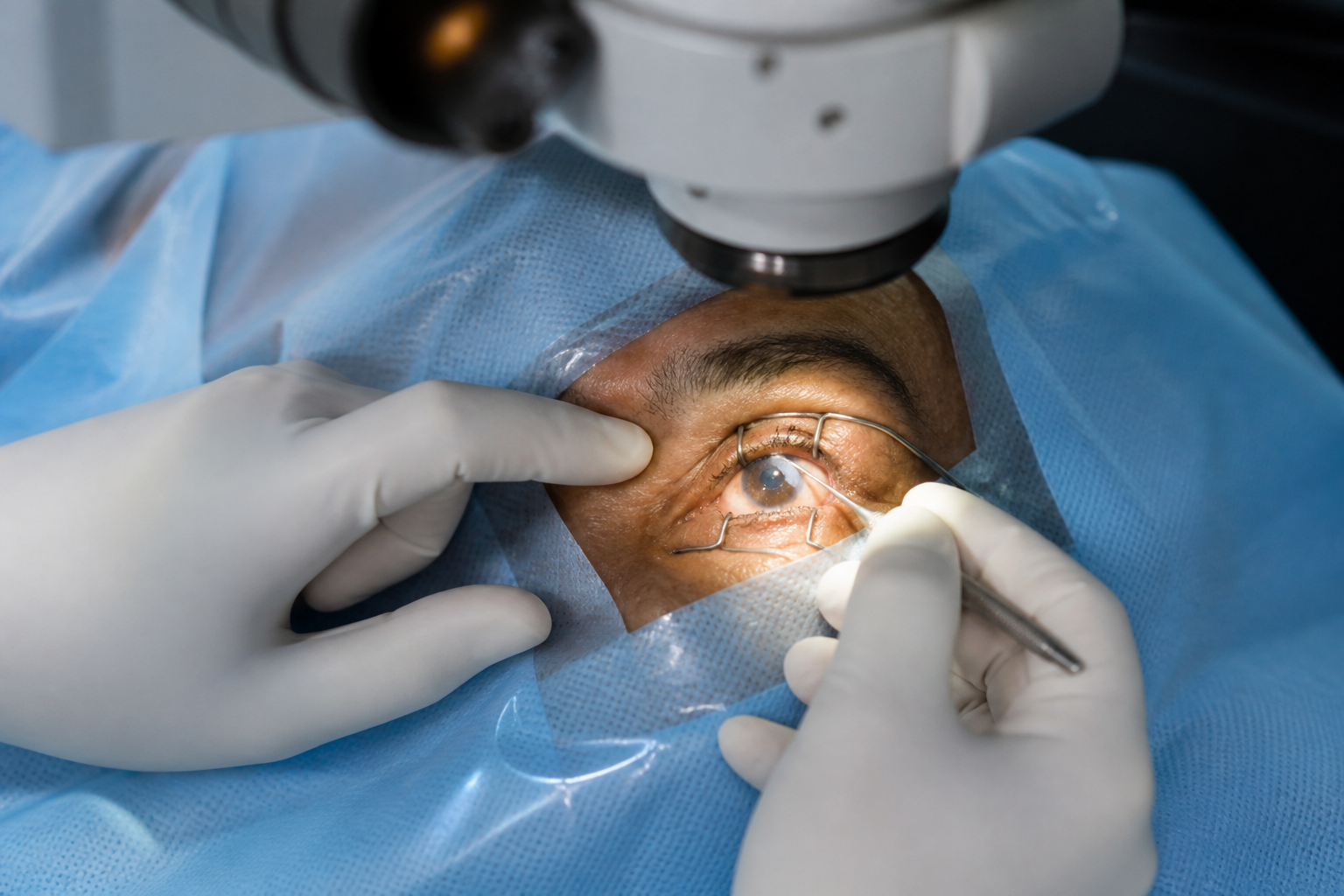
Cataract is clouding of the natural lens of the eye, which can lead to a gradual decline in vision. This condition is prevalent among older adults, but it can also affect younger individuals due to various factors. Understanding cataracts and their impact on vision is essential for effective management and treatment.
Why it develops
More than one factor can act together. Age is the most frequent; the rest explain cataract in younger eyes.
Lens proteins change slowly over decades. The lens yellows and stiffens, so light no longer passes as a clear image. This is the most common cause of cataract.
Tobacco smoke increases oxidative stress inside the lens. Long-term smoking is linked to earlier and denser cataract.
Metabolic strain associated with obesity can alter the chemistry of the lens and raise the chance of cataract forming earlier than expected.
High blood sugar changes the water balance and metabolism of the lens. People with diabetes often develop cataract younger, and it may progress faster.
A blow, penetrating injury or previous surgery can damage lens fibres. A traumatic cataract may appear soon after injury or years later.
Ionising radiation to the head or eye can injure lens cells. Cataract may follow after a delay of months to years.
Uveitis and other internal inflammation disturb the lens environment. Repeated inflammation is a recognised cause of cataract, including in younger patients.
How it feels
Symptoms build slowly. Many people first notice night driving or a change in colour, not pain.
01
Objects look foggy or out of focus, as if seen through a dirty window. Reading, faces and road signs become harder to resolve.
02
Vision falls in low light. Driving after dusk feels unsafe because contrast is reduced and the pupil opens onto a cloudy lens.
03
The lens acts like a yellow filter. Whites look cream, and colours lose their true strength until the cataract is removed.
04
Bright sunlight, headlights or indoor lamps cause discomfort. Scatter inside the cloudy lens makes light feel harsh.
05
A single object may appear doubled when the other eye is covered. This comes from irregular refraction within the cataract, not from a squint.
06
Rings or starbursts appear around lamps and oncoming headlights, especially at night, because light is diffracted by the opaque lens.
For effective cataract treatment, surgery is often recommended. Phacoemulsification is a leading surgical method where ultrasound waves are used to break up the cloudy lens. The fragments are then gently removed, and a clear, artificial lens is implanted. This advanced technique ensures minimal invasiveness and promotes quick recovery, making it a preferred choice for cataract surgery.
01
A small corneal incision of 2.8 mm is done. Then the cataract is removed by ultrasonic phacoemulsification probe, and the IOL is implanted.
02
Multifocal intraocular lenses are implanted to correct both far and near vision without spectacles. A small percentage of patients may need small power occasionally.
03
This technique reduces the incision to less than 2.2 mm. Irrigation, aspiration and phacoemulsification are performed with instruments used in standard coaxial small-incision cataract surgery. Patients may have quicker wound healing, smaller surgically induced astigmatism, better postoperative visual sharpness, lower risk of infection, and more stable corneal biomechanics.
04
These options enable vision for distance, intermediate and near tasks without blurred zones.
Cataract FAQs
There are three primary types:
Cataracts cannot be reversed with medications or non-surgical methods. The only definitive cure for cataracts is surgical intervention.
The clouded lens is removed during surgery, and a clear artificial lens is usually implanted in its place, barring some cases where the artificial lens may not be used.
Protect your eyes from UV rays with sunglasses, eat a healthy diet rich in antioxidants, avoid smoking, limit alcohol intake, and manage chronic conditions like diabetes. Regular eye exams are also crucial for monitoring eye health.
Phacoemulsification is preferred for these reasons:
These lenses are designed to provide the ability to see objects at different distances without glasses. The lens substance distributes light to different distances, allowing the eye to focus on different ranges for better vision.
Multifocal intraocular lenses are designed to provide clear vision at near, intermediate and far distances and can eliminate the need for additional reading glasses.
The best method is generally phacoemulsification because of its minimal invasiveness, quick recovery time, and high success rate. The choice may vary based on individual patient needs and the surgeon’s recommendation.
to provide comprehensive eye care services to all the sections of society at affordable cost.
Surgeons
DR KUMAR SAKET
Cataract, medical retina and trauma specialist
DR MALAY KUMAR DWIVEDI
Pediatric Ophthalmologist, Cataract and Squint specialist
Insurance and schemes
Bring your card and papers. The front desk will explain what is needed before admission.

Ayushman Bharat · PM-JAY
M G Eye Foundation is an empanelled facility under the PM-JAY scheme and welcomes patients seeking eye care under this programme. Kindly consult the front desk for further information prior to admission.
Jharkhand · SEHIS
M G Eye Foundation is associated with the Jharkhand Rajyakarmi Swasthya Bima Yojana (State Employees Health Insurance Scheme / SEHIS). State government employees, pensioners and eligible family members may seek eye care here under this programme. Kindly consult the front desk with your scheme card and papers prior to admission.