
01
Reduced blood supply
Poor perfusion of the optic nerve or brain pathways can cause sudden or stepwise vision loss.
Clear Vision. Expert Care. Healthier Eyes.
M G Eye Foundation/Services/Other Services
Besides the main surgical services, M G Eye Foundation, Bara Gamharia, Jamshedpur, offers neuro-ophthalmology assessment, an optical shop and a pharmacy. DR KUMAR SAKET and DR MALAY KUMAR DWIVEDI examine vision problems that arise from the nervous system, then support the prescription with glasses and medicines on site.
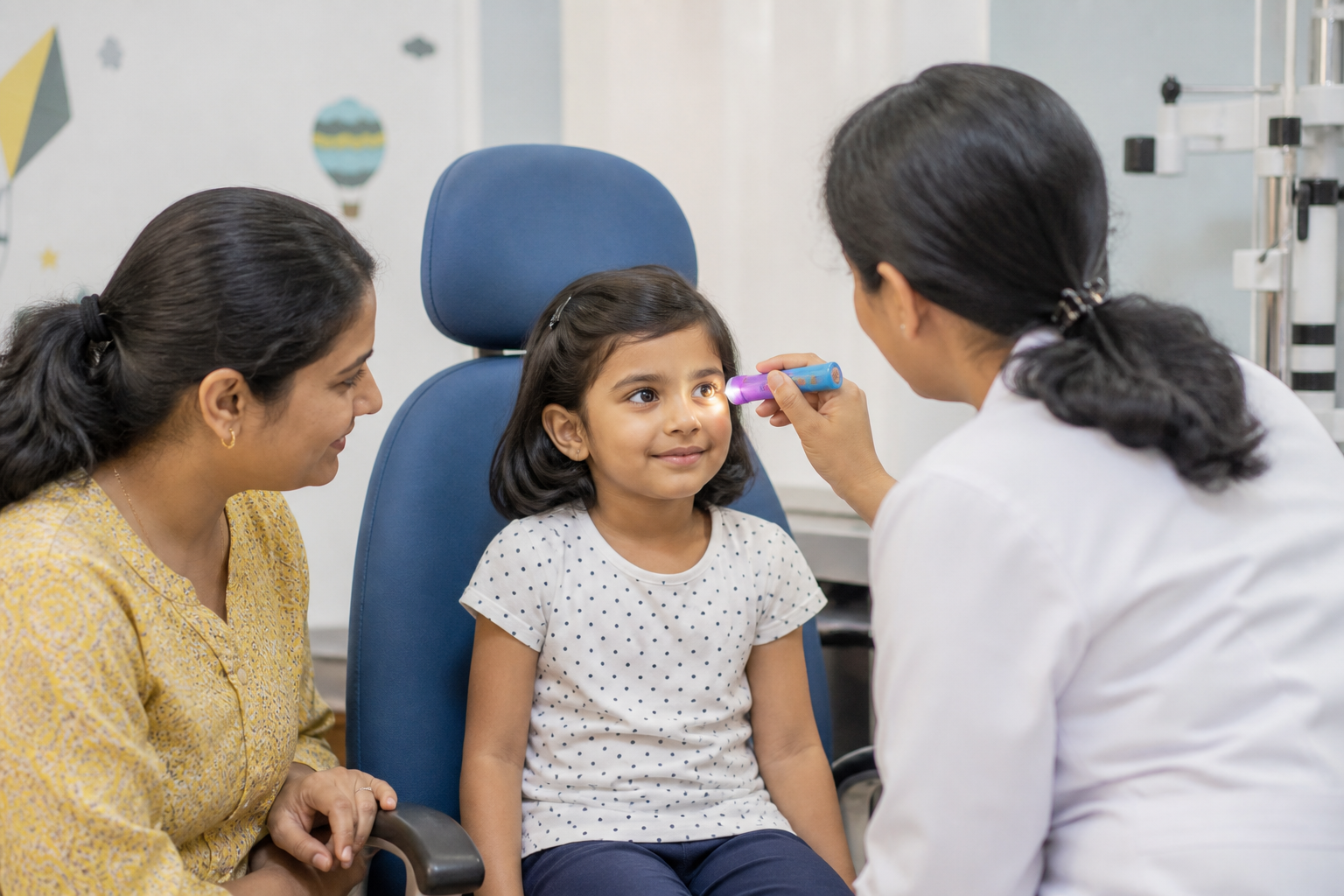
Neuro-ophthalmology sits between neurology and ophthalmology. It deals with disease of the nervous system that affects vision, eye movement or the pupils. The optical shop dispenses spectacles matched to the clinical prescription. The pharmacy compounds and dispenses medicines prescribed after the visit.
When to come
These signs can affect children and adults. Sudden vision loss or unequal pupils need prompt examination.
Poor perfusion of the optic nerve or brain pathways can cause sudden or stepwise vision loss.
Unexplained vision drop, with a structurally quiet eye, raises the question of optic nerve or brain disease.
Anisocoria may be benign or may signal nerve or iris problem. Slow reactions are also recorded.
Diplopia from cranial-nerve palsy or muscle disease is a core neuro-ophthalmic presentation.
Headache with visual change, field loss or papilloedema needs fundus and field assessment.
Poor colour discrimination and light intolerance can accompany optic neuropathy.
Missing patches of side vision may come from glaucoma, stroke or compressive lesions.
A new squint in a child or adult may be muscular, refractive or neurological.
Masses along the visual pathway can slowly reduce acuity or field.
Formed or unformed visual phenomena are investigated when the eye examination does not explain them.
How it presents
Neuro-ophthalmic disease may spare the front of the eye. The history and the disc, pupils and fields matter.
01
Especially if painless, this can be optic nerve ischaemia or inflammation and should not wait.
02
Bumping into objects on one side, or failing a driving field, points to pathway disease.
03
A pupil that does not react, or two pupils of different size, needs examination.
04
Two images that separate more in one gaze direction suggest a nerve or muscle problem.
05
Red objects look washed out in one eye compared with the other in optic neuritis.
06
After the medical visit, the optical shop and pharmacy complete the plan.
Many neuro-ophthalmic conditions are managed with investigation and medicines. Surgery is reserved for selected problems such as adult strabismus or botulinum toxin for blepharospasm and hemifacial spasm. Optical dispensing and pharmacy sit beside the clinic so the family can complete glasses and drops without a second journey when stock allows.
01
This field combines neurology and ophthalmology. It deals with nervous-system disease that affects vision, control or movement of the eyes, or pupil abnormalities. Assessment includes conditions linked to raised pressure, inflammation and eye injury when the nerve or pathways are involved.
02
Spectacles are chosen for indoor or outdoor use and for the person’s work. Trained staff help match frames and lenses to the medical prescription and to comfort, including progressive and single-vision designs as advised.
03
The pharmacy team dispenses medicines prescribed for the individual, with attention to how the drops or tablets are used and to important side effects that should be reported.
On-site equipment
Images the optic nerve and retina when swelling, atrophy or macular change must be documented.
Photographs the disc and retina for comparison and for sharing findings with the family.
Measures refractive error so glasses can be prescribed accurately after the medical examination.
Checks existing spectacles in the optical workflow.
Neuro-ophthalmology FAQs
A neuro-ophthalmologist focuses on neurological problems that affect the eye and visual pathway.
Most conditions are treated with medicines. Surgery may be used in selected situations, including adult strabismus and botulinum toxin injections for blepharospasm or hemifacial spasm.
A neuro-optometrist treats visual, perceptual and motor disorders that affect the visual system. A neuro-ophthalmologist is a medical specialist in neurology and ophthalmology who treats visual conditions caused by brain and nerve disease.
Yes. They may affect the eyelids and the muscles that move the eyes, and they may damage the optic nerve, causing partial or complete vision loss.
The occipital lobes are the main cortical area for vision.
Established optic-nerve fibre loss does not regenerate. Treatment aims to protect remaining function and treat the cause where that is possible.
to provide comprehensive eye care services to all the sections of society at affordable cost.
Doctors
DR KUMAR SAKET
Cataract, medical retina and trauma specialist
DR MALAY KUMAR DWIVEDI
Pediatric Ophthalmologist, Cataract and Squint specialist
Insurance and schemes
Bring your card and papers. The front desk will explain what is needed before admission.

Ayushman Bharat · PM-JAY
M G Eye Foundation is an empanelled facility under the PM-JAY scheme and welcomes patients seeking eye care under this programme. Kindly consult the front desk for further information prior to admission.

Jharkhand · SEHIS
M G Eye Foundation is associated with the Jharkhand Rajyakarmi Swasthya Bima Yojana (State Employees Health Insurance Scheme / SEHIS). State government employees, pensioners and eligible family members may seek eye care here under this programme. Kindly consult the front desk with your scheme card and papers prior to admission.